About This Artwork
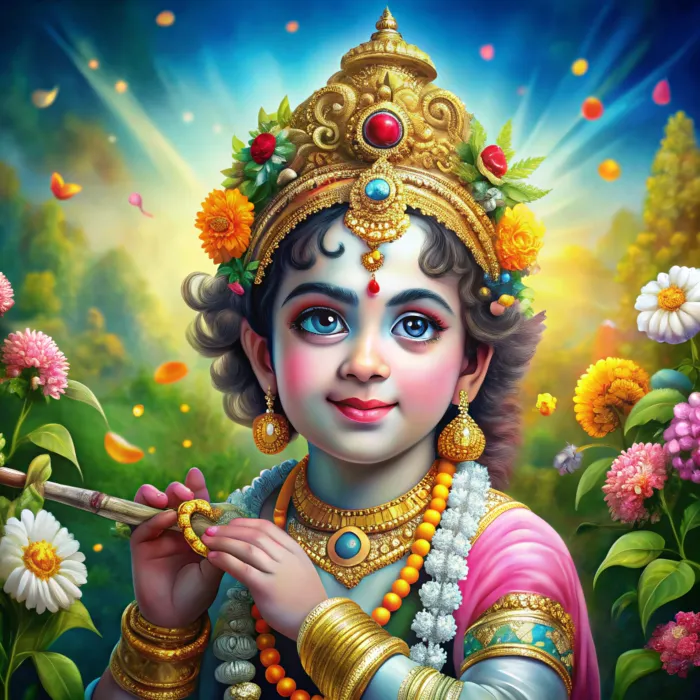
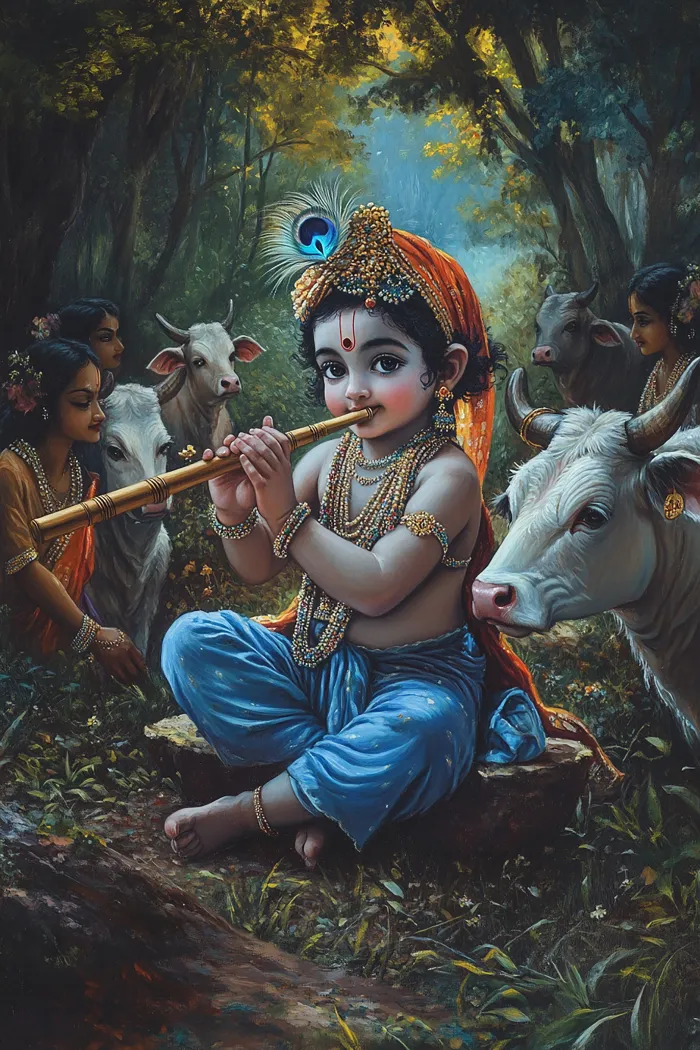
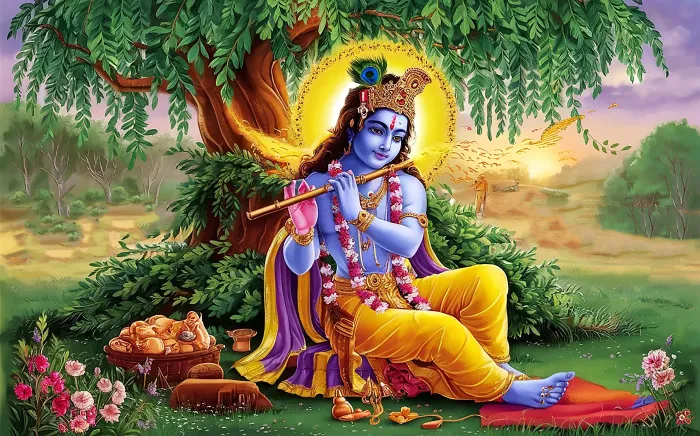
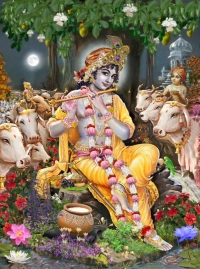
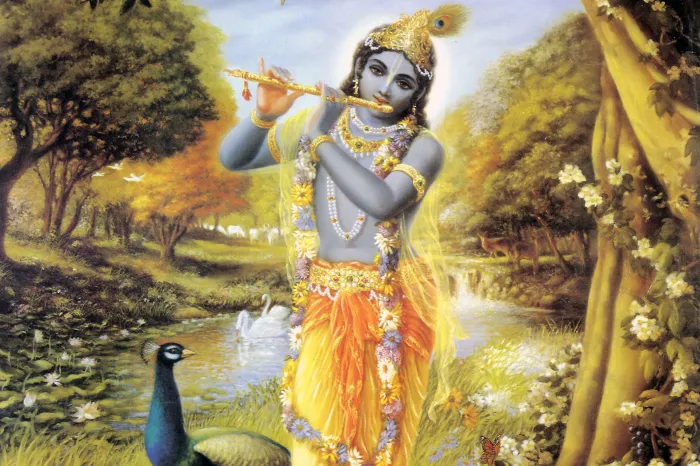
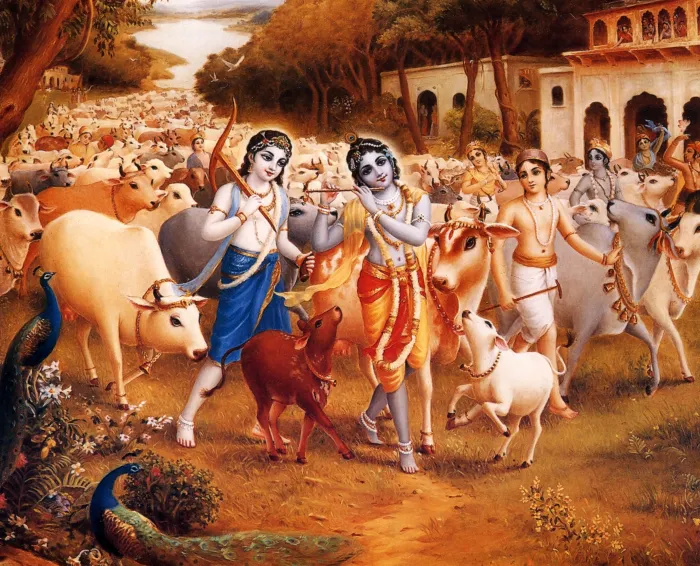
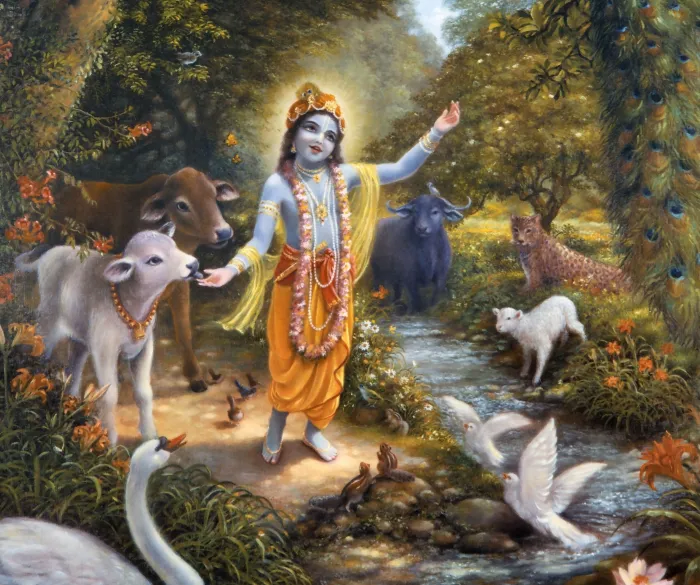
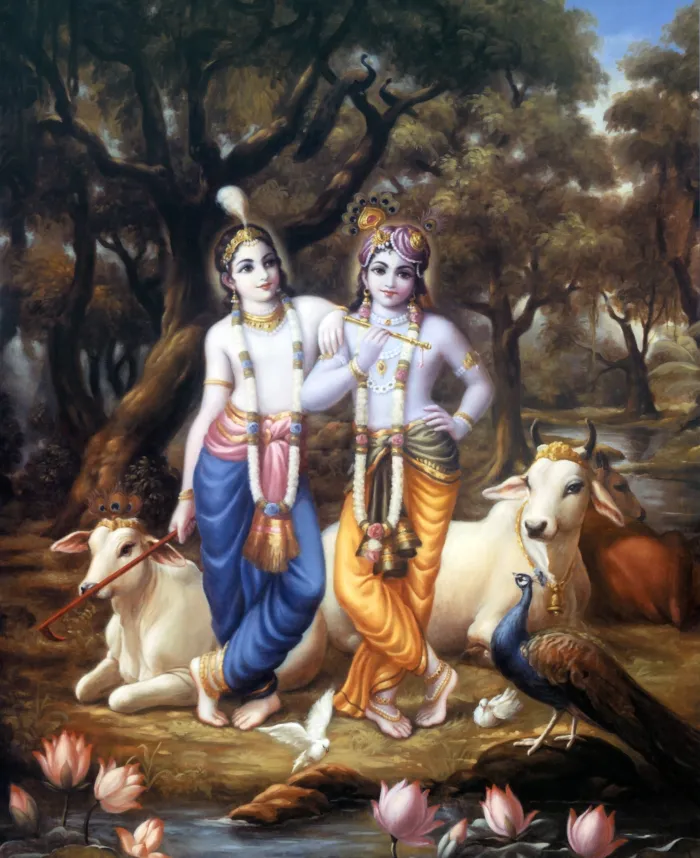
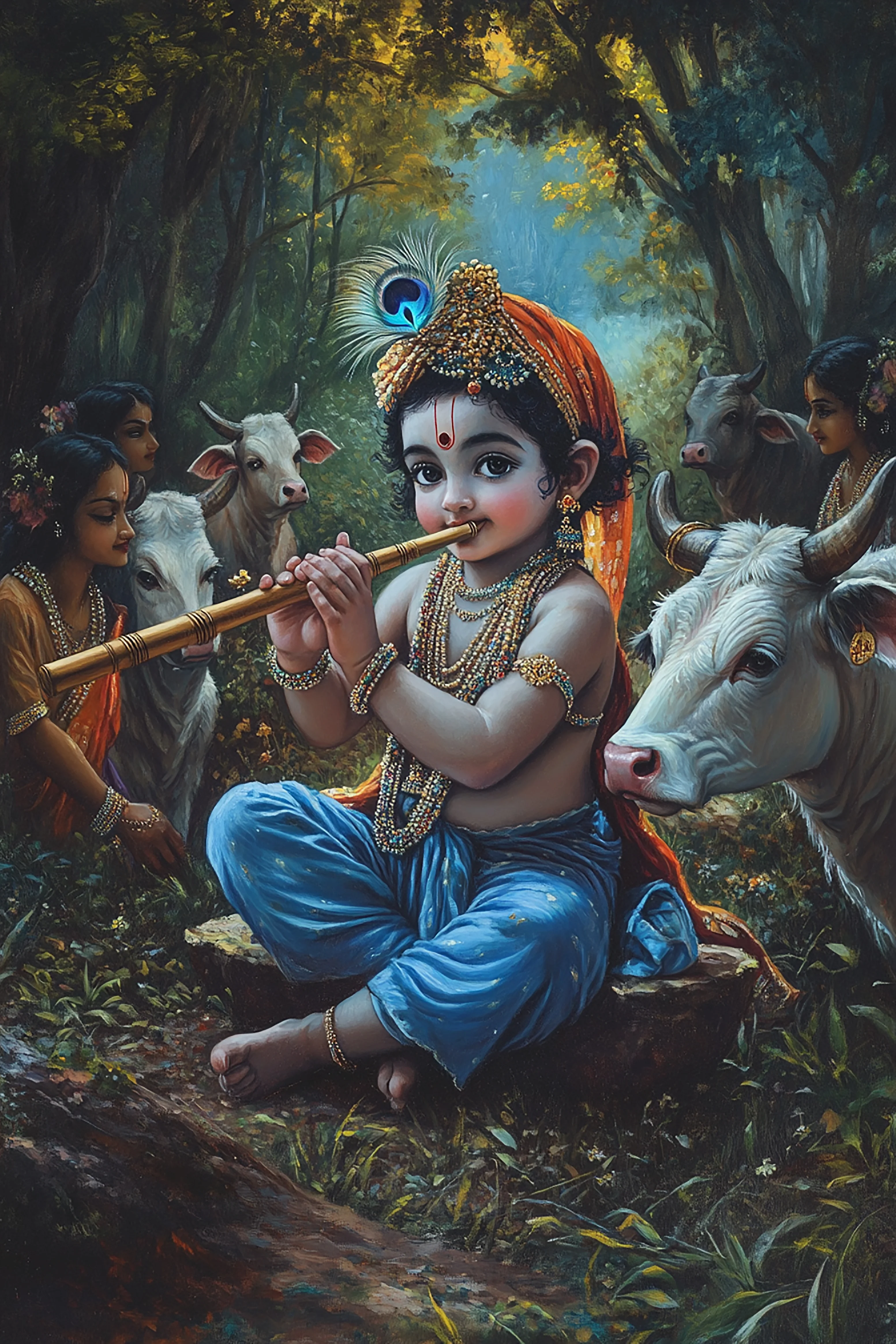
Bring home the divine bliss of Vrindavan with this exquisite painting of Baby Krishna. Adorned with a peacock feather and golden jewelry, Bal Gopal plays his celestial flute, surrounded by devoted sacred cows and gopis in a lush forest. Perfect for adding spiritual serenity to your pooja room or living space.
The divine child Bal Krishna playing his celestial flute under the lush canopy of Vrindavan, surrounded by devoted sacred cows and gopis.
Introduction to the Divine Play of Bal Krishna
The 'Playful Baby Krishna and Sacred Cows Art' is a breathtaking visual representation of one of the most cherished themes in Indian devotional art: the childhood of Lord Krishna in the sacred land of Vrindavan. Known affectionately as Bal Gopal or Laddu Gopal, the child manifestation of Krishna represents pure innocence, divine joy, and the accessible, loving nature of the Supreme Divine. This painting captures a moment of supreme tranquility and spiritual bliss, where Krishna plays his celestial flute (bansuri), captivating not only the human souls around him but also the entire animal kingdom and nature itself. Aesthetic Analysis and Visual Composition
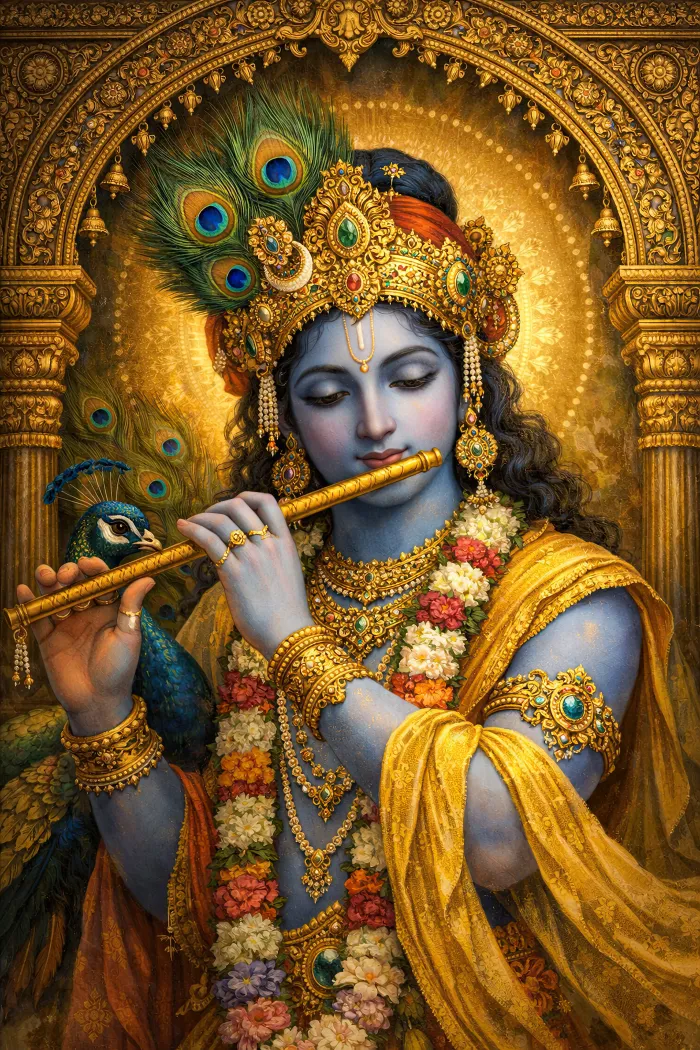
At the center of this magnificent composition sits the young Krishna, depicted with the soft, rounded features of a healthy, joyful child. His complexion, often described in classical texts as 'Meghashyam' (the color of a dark rain-filled cloud), is rendered with beautiful, subtle gradients of blue and grey, giving him an otherworldly, luminous quality. He is seated cross-legged on a rustic stone, anchoring him to the natural world while his divine presence elevates the entire scene. Krishna’s attire is a brilliant study in color contrast. He wears a rich, royal blue dhoti, draped elegantly around his legs. Over his head is a vibrant orange patka or head covering, which frames his face and cascades down his back. This orange hue symbolizes renunciation, purity, and spiritual fire. Adorning his head is the iconic peacock feather (mor pankh), its iridescent blue and green eye standing out vividly against the soft background. The peacock feather is not merely decorative; it represents the beauty of creation and Krishna's mastery over all arts and nature. The ornamentation on the young deity is exceptionally detailed. He is draped in multiple layers of golden necklaces, pearl strings, heavy armlets (bajuband), bracelets, and anklets. Each piece of jewelry is painted with meticulous precision, capturing the glint of gold and the luster of precious gems. These ornaments signify his royal lineage as a prince of Dwarka, even while he lives the simple life of a cowherd boy in Vrindavan. The Symbolism of the Sacred Cows (Gau Mata)
Surrounding Krishna are several white cows, their gentle faces turned toward him with expressions of absolute adoration and peace. In Hindu culture, the cow is revered as Gau Mata, a sacred symbol of selflessness, nourishment, and maternal love. Krishna’s deep association with cows earned him the names 'Gopala' (protector of cows) and 'Govinda' (one who brings pleasure to the cows). The artist has captured the texture of the cows' coats with remarkable realism—the soft white fur, the gentle curve of their horns, and the damp, pinkish hue of their noses. One prominent cow on the right side of the canvas presses close to Krishna, its large, dark eyes reflecting a sense of deep, meditative calm. This interaction highlights the core philosophy of Bhakti Yoga: that divine love is universal and accessible to all living beings, transcending the boundaries of species. The Presence of the Gopis
On the periphery of the central scene, two gopis (cowherd maidens of Vrindavan) are depicted. They are dressed in traditional Indian attire, with heavy golden jewelry and flowers in their hair. Their expressions are a mixture of maternal affection, awe, and deep spiritual devotion. In the Bhakti tradition, the gopis represent the individual human souls (Jivatmas) yearning for union with the Supreme Soul (Paramatma), represented by Krishna. Their quiet, respectful presence on the edges of the painting balances the composition and adds a profound layer of human emotion to the divine tableau. The Enchanted Forest of Vrindavan
The setting of the painting is the legendary Vrindavan forest, a place of eternal spring and divine pastimes. The artist has created a dense, lush background filled with towering ancient trees, soft mossy ground, and delicate wild flowers. The color palette of the forest is dominated by deep greens, earthy browns, and golden yellows, representing the fertile and life-giving nature of the sacred land. The lighting in the painting is particularly masterful. A soft, golden light filters through the dense canopy of trees, illuminating Krishna's face and casting a warm, divine glow over the entire scene. This light source, which seems to emanate from Krishna himself as much as from the sun, creates a sense of depth and mystery, drawing the viewer’s eye directly to the young deity. The play of light and shadow on the forest floor and the foliage adds a three-dimensional quality to the artwork, making the viewer feel as though they are stepping directly into this sacred forest. Spiritual and Vastu Significance for Home Decor
In Indian home decor, paintings of Lord Krishna are highly sought after for their positive energy and auspiciousness. According to Vastu Shastra, placing an image of Bal Krishna in the home, particularly in the East or North-East direction, brings peace, prosperity, and harmony to the household. The image of Krishna playing the flute is believed to ward off negative energies and fill the home with sweet, harmonious vibrations, much like the music of his bansuri. This painting is especially beneficial for the pooja room, where it can serve as a focus for daily meditation and prayers. It is also an excellent choice for the living room, where its serene beauty and rich cultural narrative can be appreciated by family members and guests alike. Conclusion
The 'Playful Baby Krishna and Sacred Cows Art' is more than just a decorative print; it is a visual celebration of divine love, nature, and spiritual heritage. Through its rich colors, intricate details, and profound symbolism, it brings the timeless stories of Vrindavan to life, offering a daily source of inspiration, peace, and joy for your home.
Curator note: Decorating your home with spiritual art is more than just an aesthetic choice; it's a way to invite positive vibrations and peaceful energy into your living space. Our latest feature, the 'Playful Baby Krishna and Sacred Cows Art', beautifully captures the innocence of Bal Gopal in the mystical forests of Vrindavan. In this post, we explore how to style this traditional masterpiece in modern Indian homes...
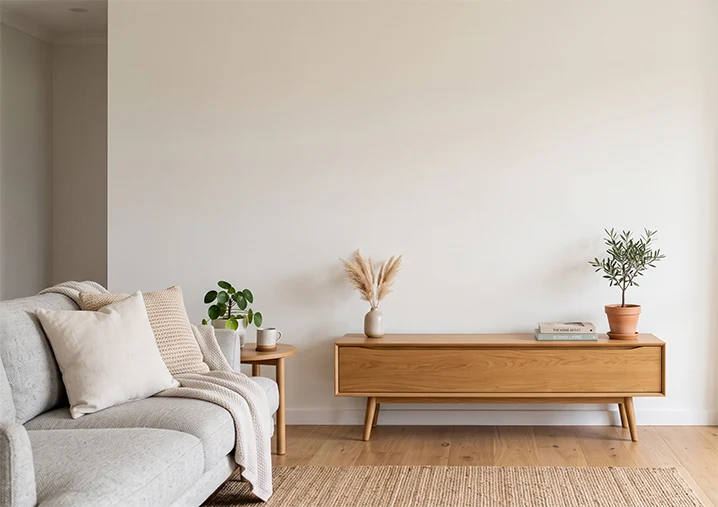
Visualize how this masterpiece transforms different spaces.





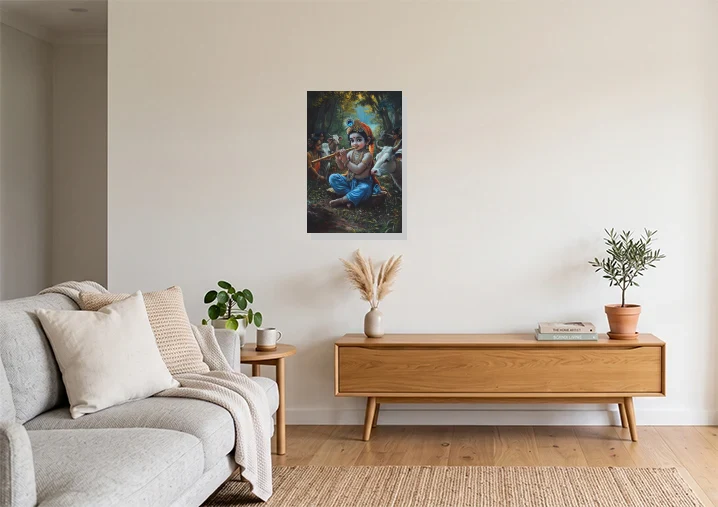
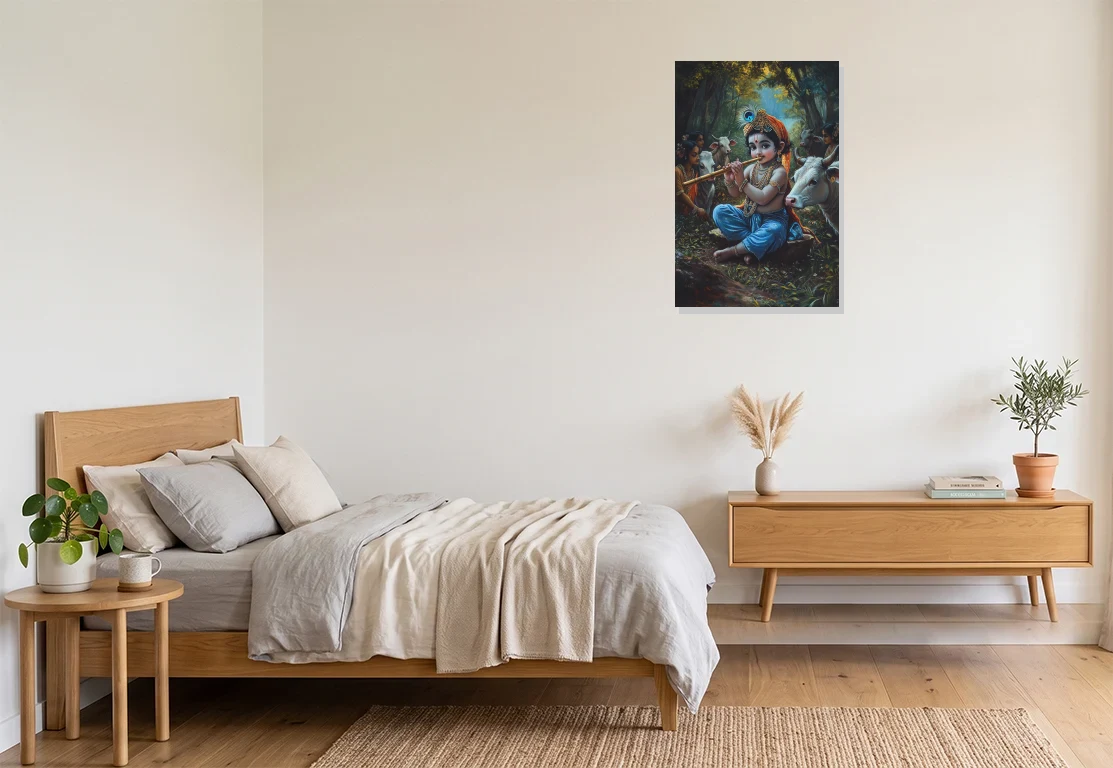
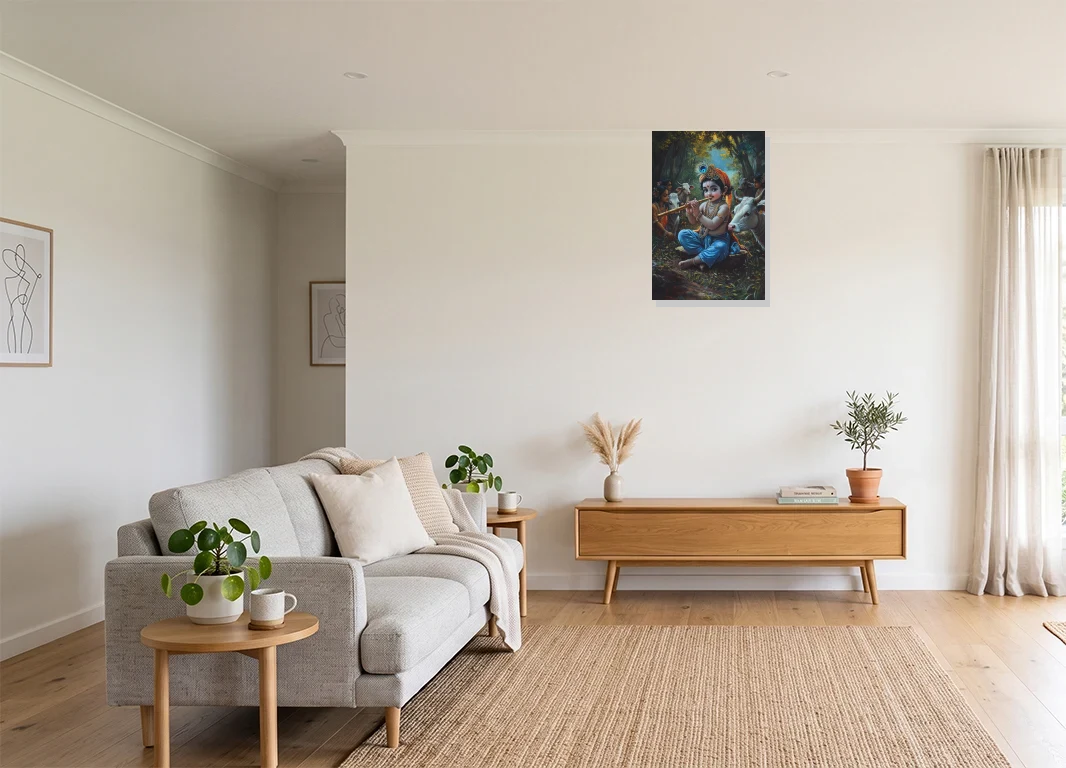
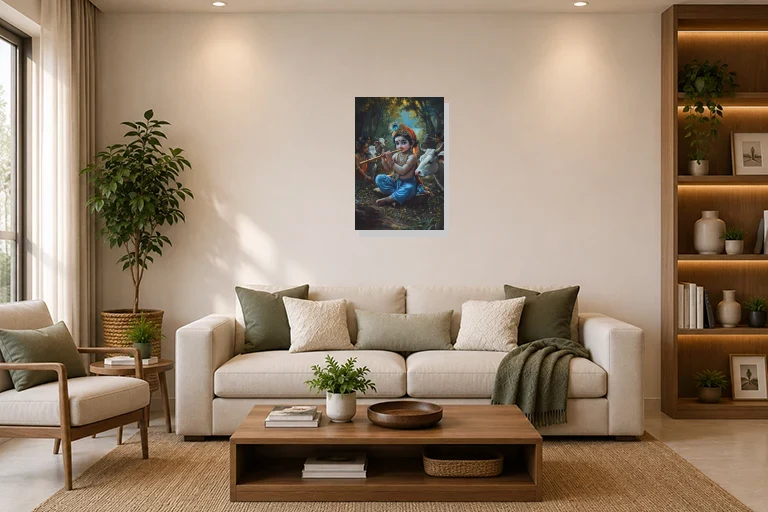
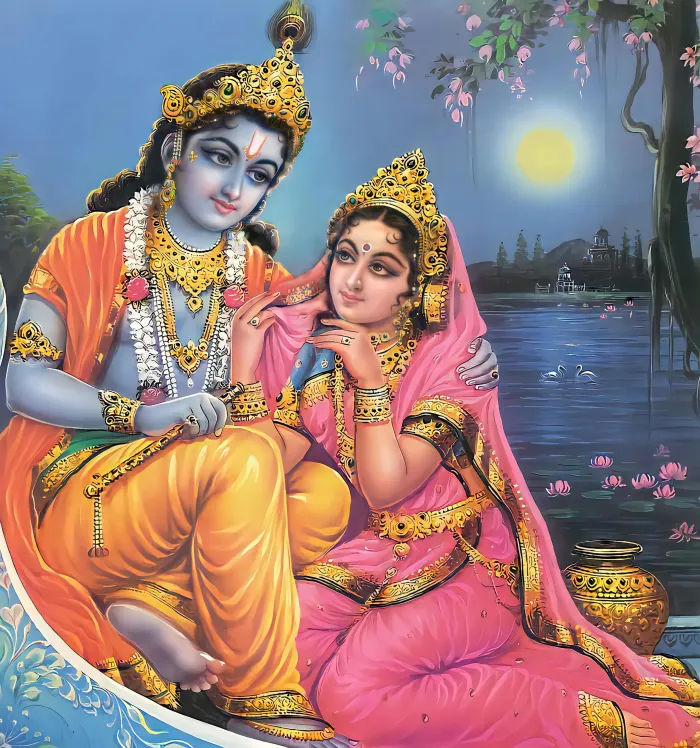
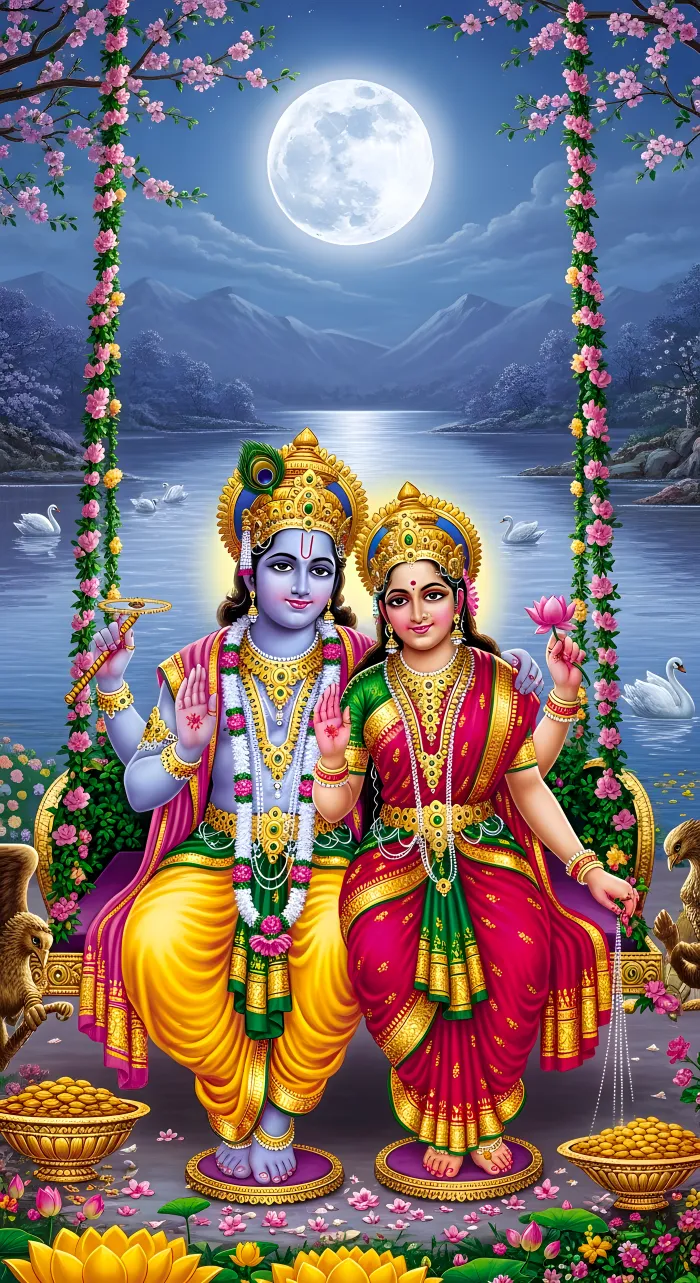
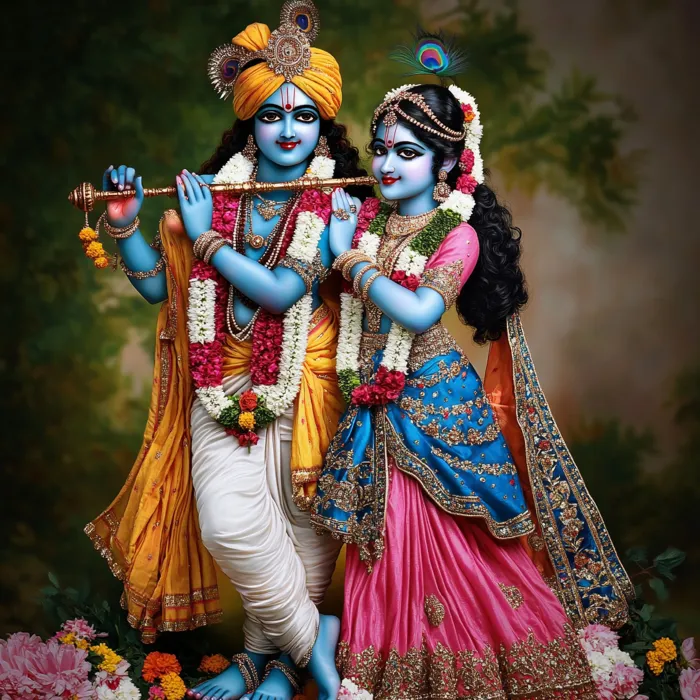
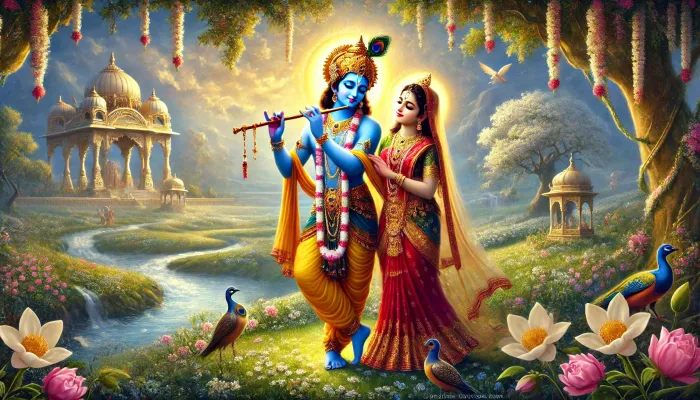
 (1).webp "Celestial Radha Krishna Love Print wall art print")
.webp "Illustration of Lord Krishna's blue hands playing a golden flute decorated with a peacock feather above two pots of butter.")
.webp "Modern anime-style digital painting of Shri Radha in orange and Lord Krishna in blue gazing lovingly at each other in Vrindavan.")
.webp "Cute digital illustration of baby Lord Krishna with blue skin playing a flute next to a small brown calf.")
.webp "Devotional painting of Radha in a yellow lehenga holding a flute, sitting next to Krishna in a blue dhoti under a lush tree.")
.webp "Modern vector illustration of Radha and Krishna holding hands under a blossoming tree in Vrindavan.")
.webp "Digital painting of Radha and Krishna in a close embrace, surrounded by orange and blue flowers on a dark background.")
.webp "A serene blue-skinned idol of Lord Krishna holding a white flute, adorned with white flowers and a golden crown against a dark blue floral background.")
.webp "A serene digital painting of Lord Krishna with blue skin, holding a golden flute amidst golden flowers.")
.webp "Ethereal Lord Krishna Painterly Portrait wall art print")
.webp "Digital painting of Lord Krishna playing the flute, surrounded by peacock feathers and lotuses.")
.webp "A vibrant digital painting of Radha and Krishna in a loving embrace near a lake with a temple boat.")
.webp "Divine Radha Krishna Radiant Portrait Print wall art print")
.webp "Ethereal Blue Krishna Playing Flute Canvas wall art print")
.webp "Meditative Krishna Face Close-Up Canvas wall art print")
.webp "Divine Krishna Embracing Sacred Cow Print wall art print")
.webp "Radha Krishna Divine Swing Canvas Print wall art print")
.webp "Cute Animated Radha Krishna Art Print wall art print")
.webp "Majestic Peacock Radha Krishna Canvas wall art print")
.webp "Ethereal Floral Radha Krishna Print wall art print")
.webp "Abstract Ornate Radha Krishna Canvas wall art print")
.webp "Vibrant Radha Krishna Swing Canvas Art wall art print")
.webp "Cute Radha Krishna Lotus Hug Canvas wall art print")
.webp "Adorable Bal Krishna and Radha Print wall art print")
.webp "Radha Krishna Happy Holi Watercolor Art wall art print")
.webp "Festive Radha Krishna Holi Celebration Canvas wall art print")

 Continue with Google