About This Artwork
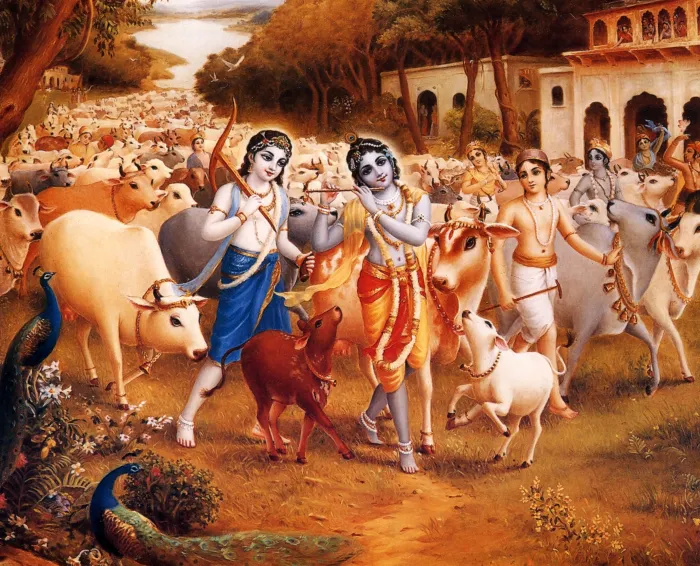
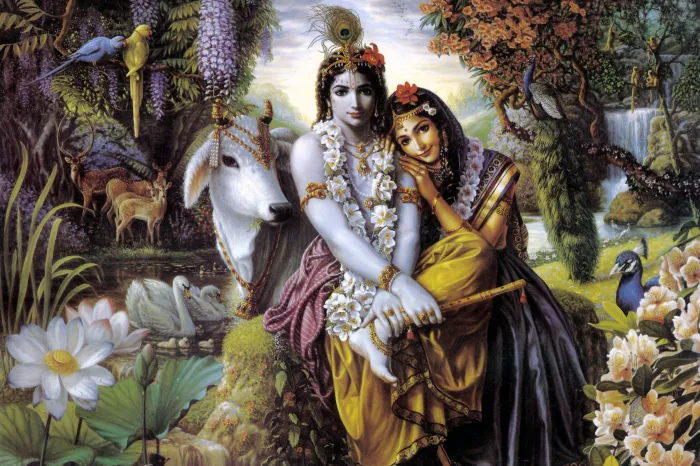
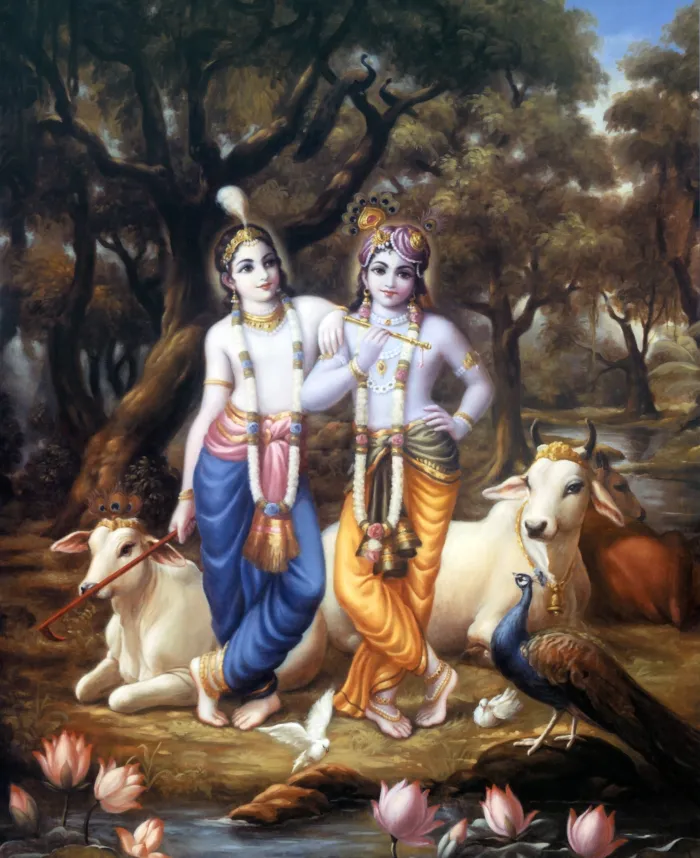
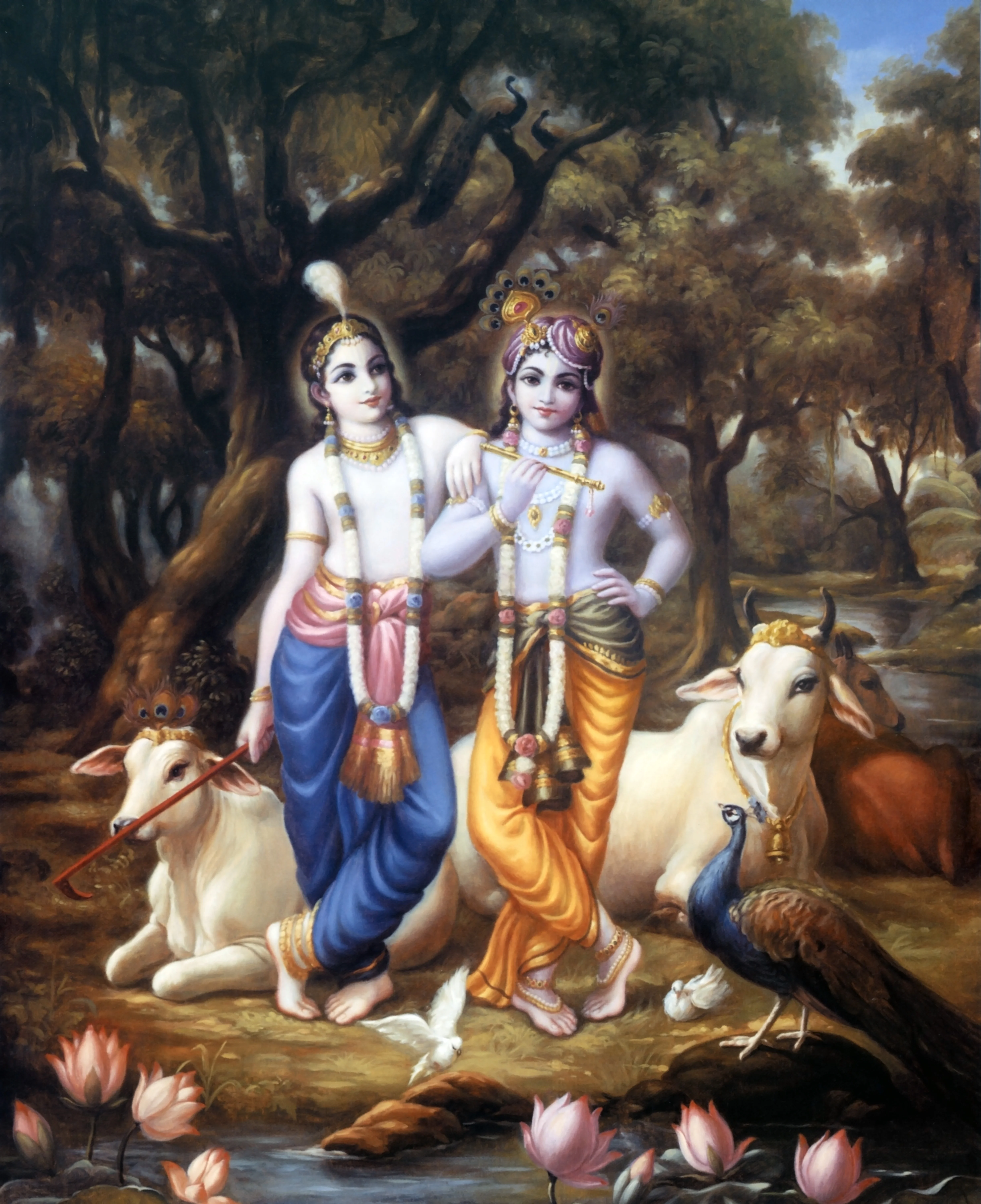
A serene depiction of Sri Krishna and Balarama in the sacred groves of Vrindavan, surrounded by gentle cows, a majestic peacock, and blooming lotuses. This traditional Indian spiritual painting captures the divine brotherhood and pastoral beauty of Vraja, making it a perfect addition to your home altar or living room.
The divine brothers Sri Krishna and Balarama amidst the sacred groves of Vrindavan, accompanied by Surabhi cows, a peacock, and blooming lotuses.
Step into a realm of absolute peace, devotion, and timeless beauty with this magnificent canvas print depicting Sri Krishna and Lord Balarama in the sacred groves of Vrindavan. This artwork is a stellar example of Vedic Realism, a style that masterfully bridges the gap between classical European painting techniques and the deep, esoteric iconography of ancient Indian scriptures. Every brushstroke in this painting is infused with devotion, designed to transport the viewer away from the chaos of material life and into the serene, transcendental atmosphere of Vraja Dhama. ### Theological and Iconographical Significance
In the Vedic tradition, Sri Krishna and Lord Balarama are the primeval brothers, representing the ultimate manifestations of the Supreme. Krishna is the source of all sweetness, beauty, and love (Madhurya), while Balarama is the source of strength, spiritual gravity, and service (Aishwarya). This painting beautifully captures these complementary energies through deliberate color symbolism and posture. * **Sri Krishna (Shyamasundara):** Depicted on the right, Krishna possesses a complexion like that of a dark blue raincloud. He stands in His relaxed, elegant posture, holding His flute (Vansi). His yellow garments (Pitambara) represent the radiant sun, symbolizing light, warmth, and spiritual knowledge. The peacock feather tucked into His crown represents His connection to nature and His supremacy over all creation. * **Lord Balarama (Haladhara):** Standing on the left, Balarama is fair-skinned, resembling the autumn cloud or white jasmine. He wears blue garments (Nilambara), symbolizing the vast, deep blue sky. Balarama is the protector and the eternal guide; His gentle lean towards Krishna signifies His role as the first and foremost servant and companion of the Lord. Together, they wear exquisite flower garlands (Vanamala) made of forest flowers, delicate pearl necklaces, and golden ornaments that glisten against their transcendental forms. Their expressions are filled with soft, compassionate smiles, offering reassurance and peace to anyone who gazes upon them. ### The Sacred Landscape of Vrindavan
The setting of the painting is not merely a background but an active participant in the divine pastimes (Lilas). Vrindavan is described in scriptures as a place where the trees are desire-trees, the water is nectar, and every step is a dance. The artist has captured this mystical quality by painting a dense, protective canopy of ancient trees with twisted, character-filled trunks and soft, golden-green foliage. The light filters gently through the leaves, casting a warm, ethereal glow over the entire scene. To their sides, the Surabhi cows—the wish-fulfilling cows of the spiritual sky—look on with deep affection. One cow rests on the ground, its head turned lovingly toward the brothers, while another stands behind them, representing the abundance, peace, and non-violence that define the spiritual realm. In the foreground, a beautifully detailed peacock rests on a dark rock, its long tail feathers cascading down. Peacocks are legendary symbols of royalty, beauty, and the ecstatic joy of devotion. Nearby, white doves and small birds gather, illustrating that in the presence of the Divine, all living entities exist in perfect, fearless harmony. At the bottom of the canvas, the cool, blue waters of the Yamuna River flow gently. Out of the water emerge several pristine pink lotuses (Kamala). In Indian philosophy, the lotus is the ultimate symbol of purity and spiritual detachment; though it grows in mud, it remains untouched by water, teaching us to live in the world without being contaminated by its anxieties. ### Vastu and Home Styling Guidelines
This painting is an incredibly auspicious addition to any Indian household. To maximize its positive energy and aesthetic impact, consider the following styling tips:
1. **Pooja Room / Altar:** Place this painting as the central backdrop of your home altar. The realistic depiction of the deities provides an excellent focus for daily prayers, meditation, and offering of prayers. 2. **Living Room:** Hang this artwork on a prominent accent wall in your living room. It acts as an instant conversation starter, showcasing your appreciation for classical Indian art and spirituality. Pair it with warm wooden furniture, brass accents, and warm-toned lighting to complement the painting's earthy color palette. 3. **Vastu Direction:** According to Vastu Shastra, spiritual paintings of deities should ideally be placed on the East or Northeast walls of the home. This direction is associated with the rising sun, new beginnings, and spiritual growth, allowing the positive vibrations of the artwork to flow throughout the house. 4. **Framing:** While the canvas print looks stunning as a gallery wrap, framing it in a classic, dark teakwood or antique gold frame can elevate its traditional heritage appeal, making it look like an heirloom piece passed down through generations. ### Why Choose This Canvas Print? Printed on premium-grade matte canvas using state-of-the-art archival inks, this artwork ensures exceptional color accuracy, depth, and longevity. The rich, velvety textures of the canvas bring out the subtle details of the oil-painting style—from the delicate folds of the dhotis to the soft texture of the cows' coats and the intricate patterns of the jewelry. It is a durable, fade-resistant masterpiece that will continue to inspire devotion and bring peace to your family for decades to come.
Curator note: The bond between Sri Krishna and His elder brother Balarama is one of the most celebrated relationships in Indian scriptures. Representing strength, protection, and divine playfulness, their pastimes in the forests of Vrindavan bring a sense of absolute peace to any space. In this blog post, we explore the deep iconographical significance of their attire—Krishna's yellow dhoti and Balarama's blue dhoti—and how displaying this sacred art in your home can enhance spiritual well-being and positive energy according to Vastu Shastra.
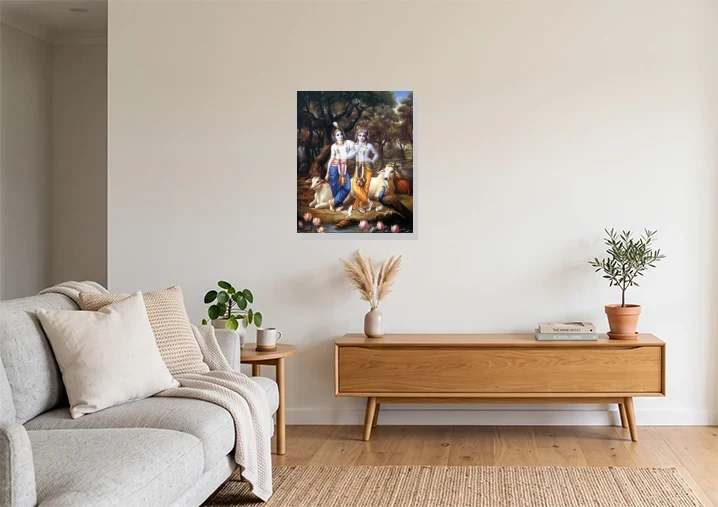
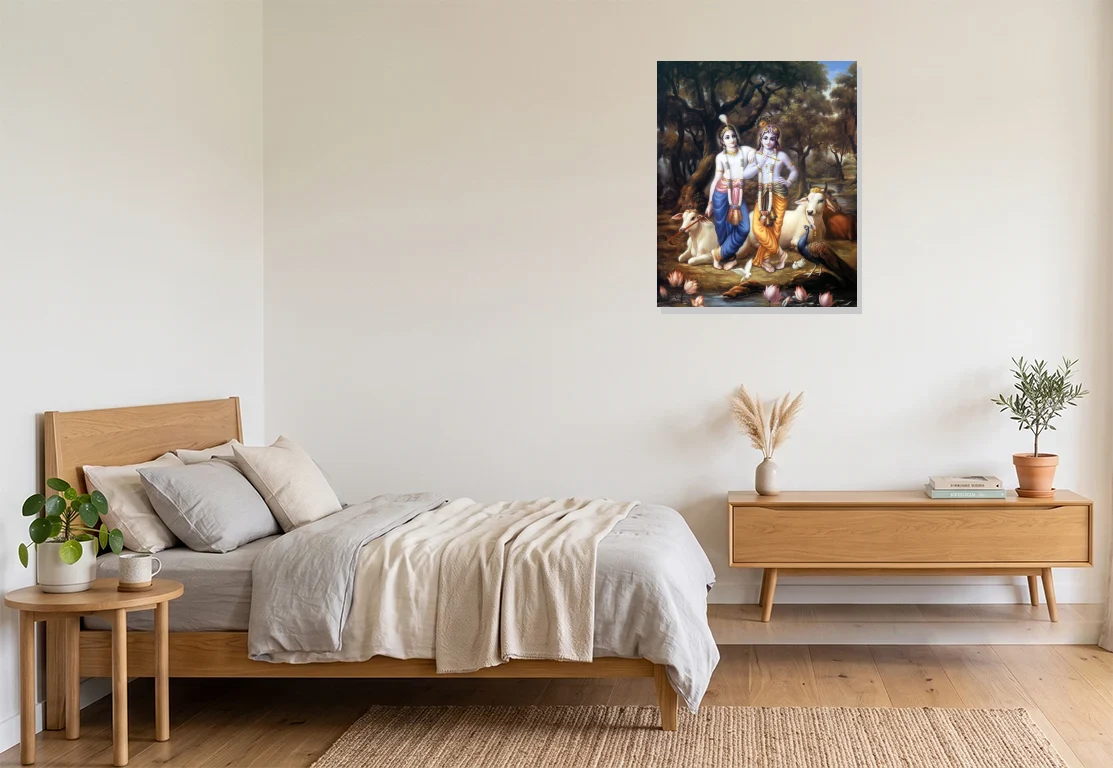
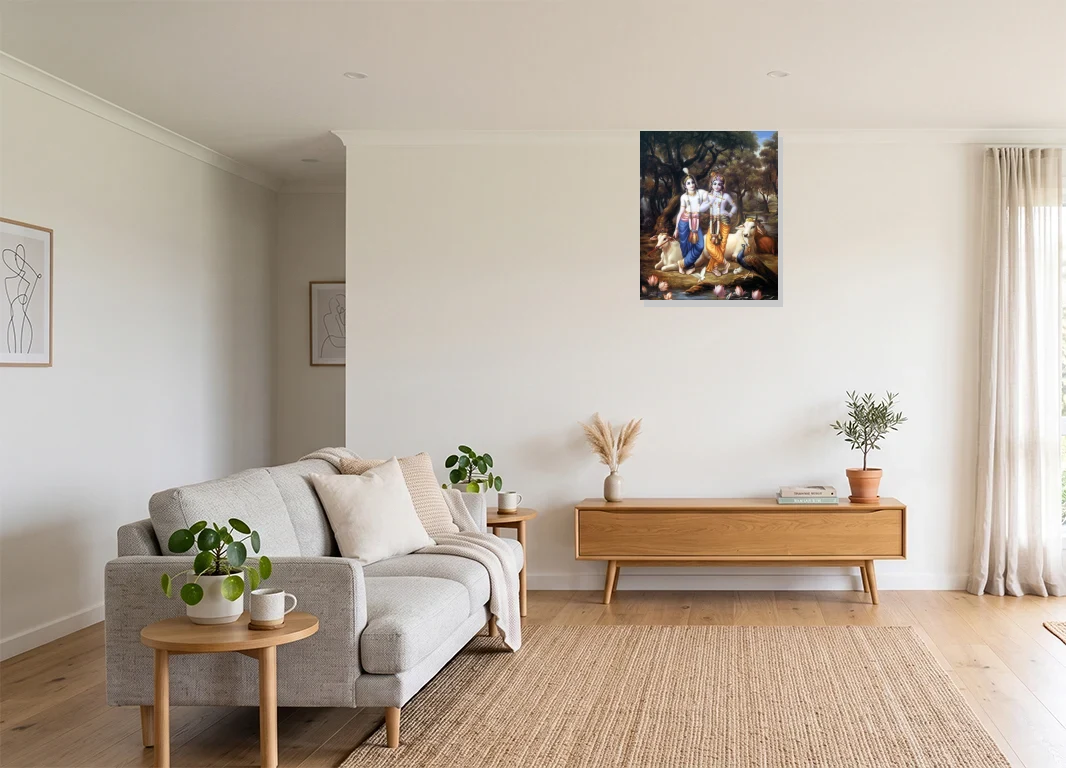
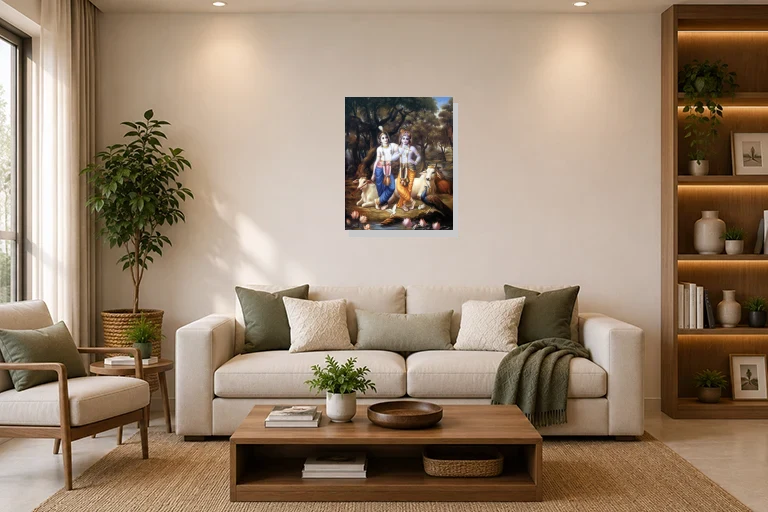
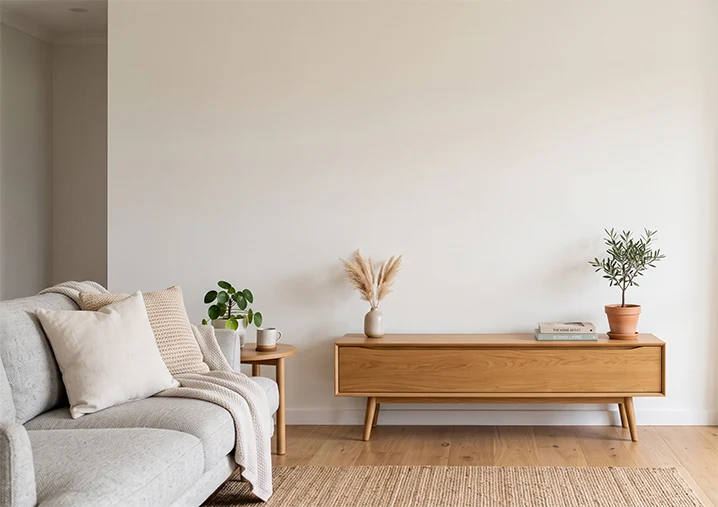
Visualize how this masterpiece transforms different spaces.





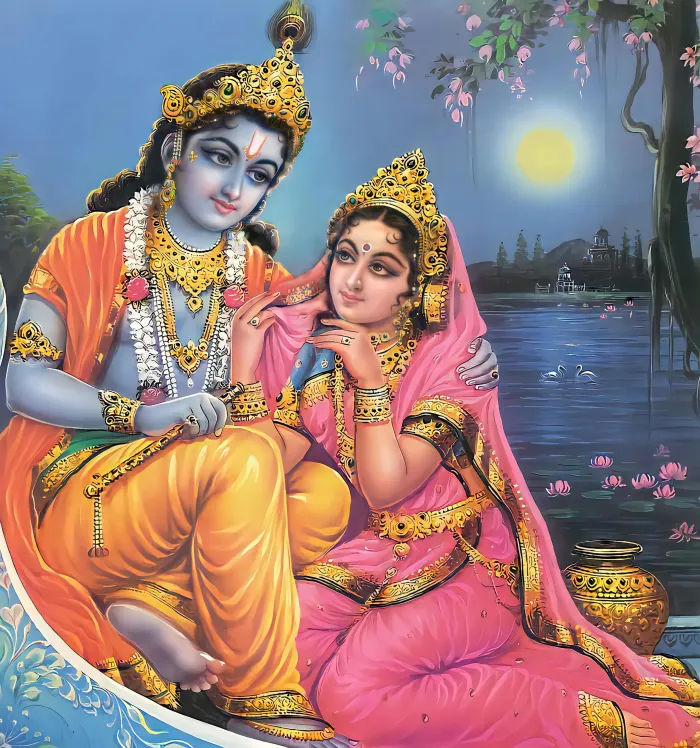
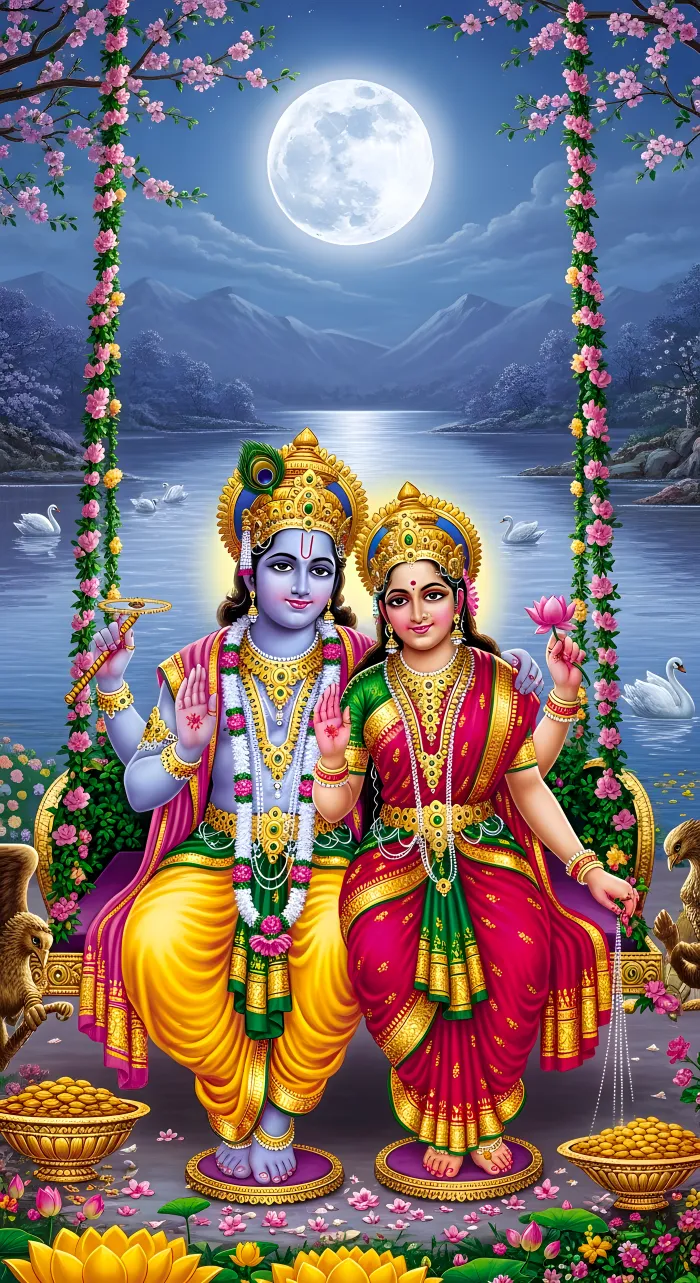
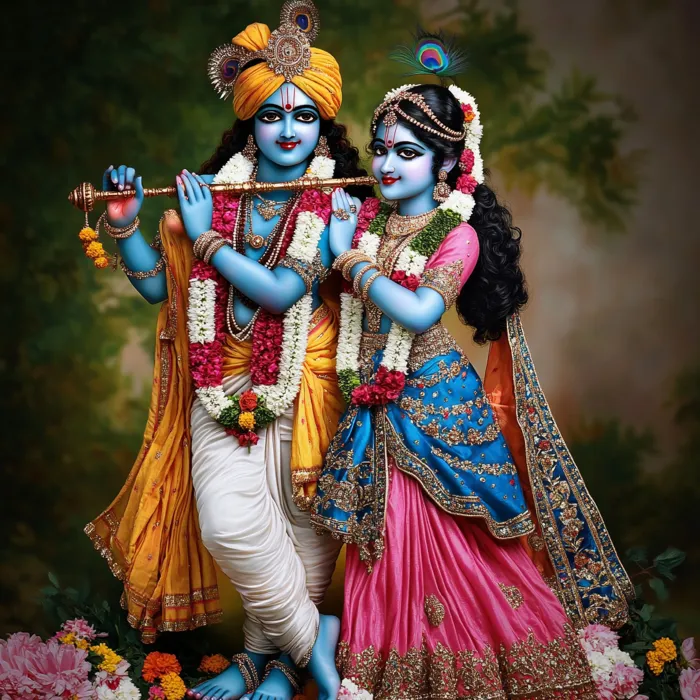
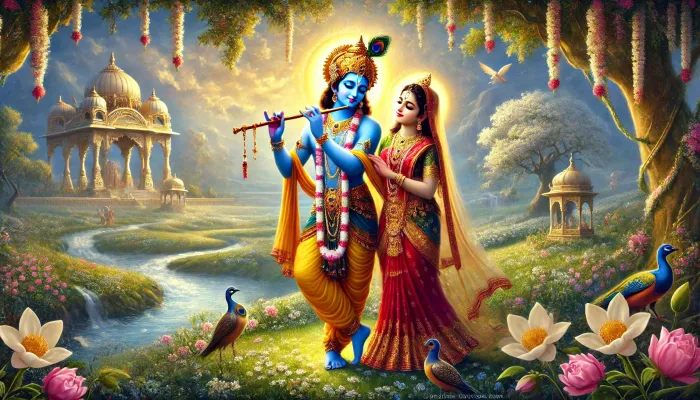
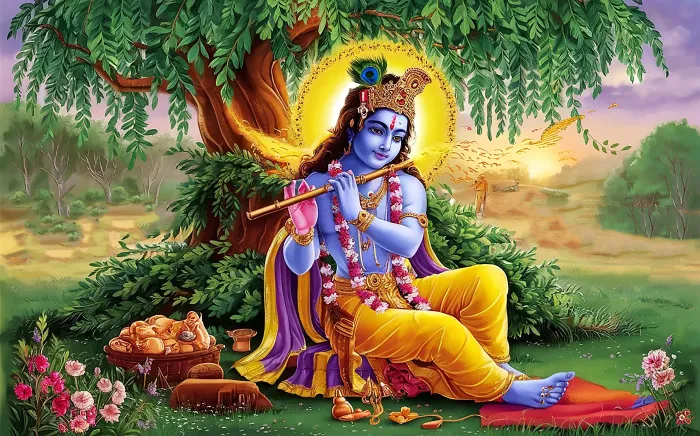
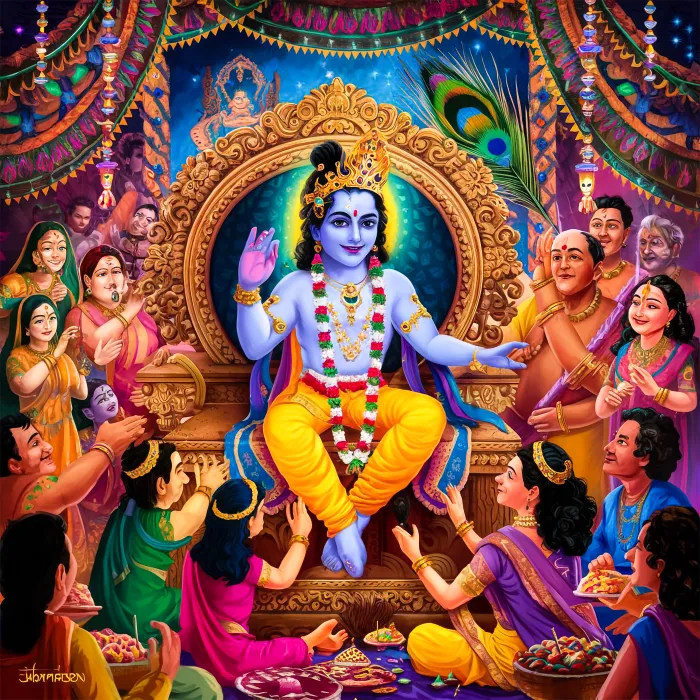
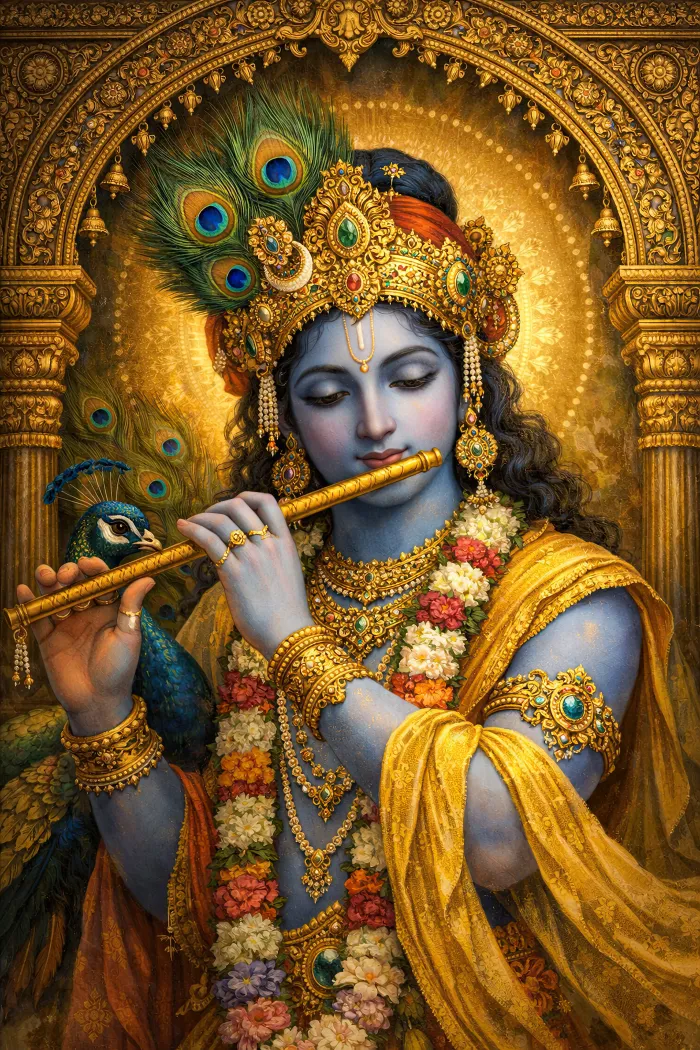
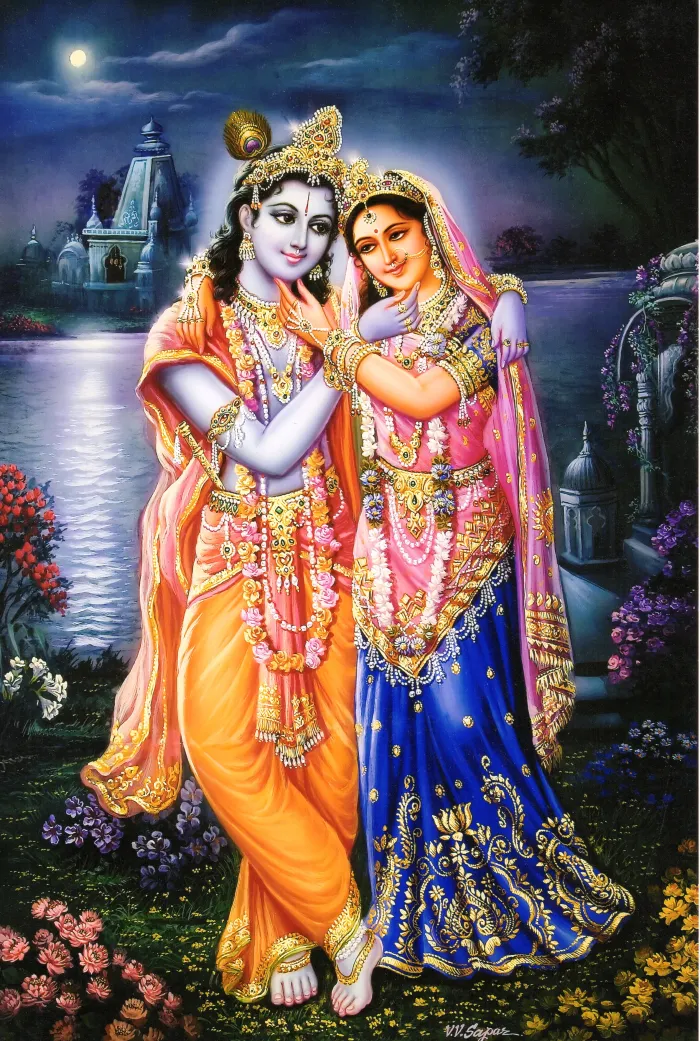
 (1).webp "Celestial Radha Krishna Love Print wall art print")
.webp "Illustration of Lord Krishna's blue hands playing a golden flute decorated with a peacock feather above two pots of butter.")
.webp "Modern anime-style digital painting of Shri Radha in orange and Lord Krishna in blue gazing lovingly at each other in Vrindavan.")
.webp "Cute digital illustration of baby Lord Krishna with blue skin playing a flute next to a small brown calf.")
.webp "Devotional painting of Radha in a yellow lehenga holding a flute, sitting next to Krishna in a blue dhoti under a lush tree.")
.webp "Modern vector illustration of Radha and Krishna holding hands under a blossoming tree in Vrindavan.")
.webp "Digital painting of Radha and Krishna in a close embrace, surrounded by orange and blue flowers on a dark background.")
.webp "A serene blue-skinned idol of Lord Krishna holding a white flute, adorned with white flowers and a golden crown against a dark blue floral background.")
.webp "A serene digital painting of Lord Krishna with blue skin, holding a golden flute amidst golden flowers.")
.webp "Ethereal Lord Krishna Painterly Portrait wall art print")
.webp "Digital painting of Lord Krishna playing the flute, surrounded by peacock feathers and lotuses.")
.webp "A vibrant digital painting of Radha and Krishna in a loving embrace near a lake with a temple boat.")
.webp "Divine Radha Krishna Radiant Portrait Print wall art print")
.webp "Ethereal Blue Krishna Playing Flute Canvas wall art print")
.webp "Meditative Krishna Face Close-Up Canvas wall art print")
.webp "Divine Krishna Embracing Sacred Cow Print wall art print")
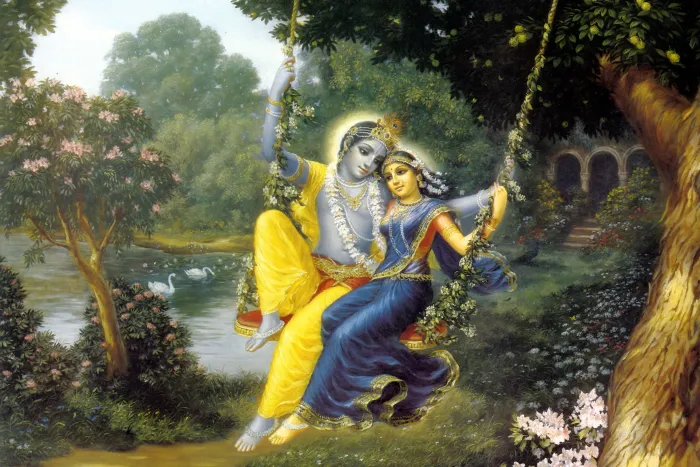
.webp "Radha Krishna Divine Swing Canvas Print wall art print")
.webp "Cute Animated Radha Krishna Art Print wall art print")
.webp "Majestic Peacock Radha Krishna Canvas wall art print")
.webp "Ethereal Floral Radha Krishna Print wall art print")
.webp "Abstract Ornate Radha Krishna Canvas wall art print")
.webp "Vibrant Radha Krishna Swing Canvas Art wall art print")
.webp "Cute Radha Krishna Lotus Hug Canvas wall art print")
.webp "Adorable Bal Krishna and Radha Print wall art print")
.webp "Radha Krishna Happy Holi Watercolor Art wall art print")
.webp "Festive Radha Krishna Holi Celebration Canvas wall art print")

 Continue with Google